Published October 1, 2026
Memorable brand music production starts with a clear brief, not just a catchy tune. The process connects what your business stands for to a musical direction, then shapes that sound for the places you plan to use it. If youâre unsure how to describe your brand in musical terms, or whether you need custom music, a stock track, or a jingle, start by considering your goals, budget, and intended uses.
This guide walks through the process, from defining the brief to reviewing the finished sound. Youâll learn what information helps a composer translate brand identity into music, how custom production compares with stock tracks and jingles, and what to clarify about formats, usage rights, and revisions before work begins.
Planning for each channel matters. Music made for a video may need to be adapted for a short social clip or another use. By the end, youâll have a practical way to decide whether custom music fits your business and what to ask before starting a project.
Key Takeaways
- Turn brand traits, audience, and intended uses into a clear creative brief before production begins.
- Choose brand music production when you want more control over the sound; consider an existing track for a narrower need.
- List where the music will appear so it can work alongside video, spoken content, and platform requirements.
- Before choosing a production partner, clarify project scope, deliverables, feedback, and usage rights.
- Ask how the provider will translate your brief into creative decisions and adapt the work to your intended uses.
Table of Contents
- What Brand Music Production Means for a Business
- How Brand Music Production Turns a Brief into a Finished Sound
- Custom Brand Music vs. Stock Music: How to Choose
- How to Prepare Brand Music for Real Business Use
- Choosing a Brand Music Production Partner and Taking the Next Step
What Brand Music Production Means for a Business
Brand music production creates or shapes audio to express a businessâs identity and support the experience it wants people to have. Music might appear in a video, an advertisement, digital content, or an in-person setting. The goal is not simply to find a track that sounds appealing. Itâs to connect the businessâs character, its audience, and the way the sound will be used.
Brand music can take several forms. A commissioned piece is created for a specific business. A stock track is an existing recording selected for a project, subject to its license terms. Background music describes musicâs role in a space or piece of content; it may or may not have been chosen to express a particular brand. A jingle is usually a short advertising song or musical phrase. These categories can overlap, but they serve different needs.
Sound can also become a recognizable part of a brand through a short musical signature or recurring musical choices. The Sound trademark overview offers context on sound as a brand identifier, including jingles and sound logos. A business doesnât need a complete sonic identity system to make intentional choices about its music.
How Is Brand Music Different from a Jingle?
A jingle is typically built around a specific advertising message and is meant to be memorable in a short space. Brand music has a broader role: it can establish a consistent audio tone across different content or experiences. That doesnât mean every business needs a collection of audio assets. A recurring instrument, mood, or musical style may be enough to create a recognizable thread.
Hypothetical example: A neighborhood bakery might use a brief, cheerful jingle in a seasonal ad, then choose softer, warm-toned music for longer videos introducing its products and people. The pieces serve different purposes while reflecting the same approachable character.
When Might a Business Need Custom Brand Music?
Custom music may be worth exploring when a business regularly creates content and wants more control over how its audio reflects the brand. It can help align music across video, advertising, and other customer touchpoints when the piece is planned for those uses. Existing licensed music may be a better fit for a one-off video or another narrow need. In either case, confirm that the license or agreement covers the intended use.
For an example of how a custom audio direction can support a brand, read this custom music case study in sonic branding. Before choosing an approach, list where the music will appear and what it needs to communicate. That gives you a clearer basis for deciding whether an original composition or an existing track is the better fit.
How Brand Music Production Turns a Brief into a Finished Sound
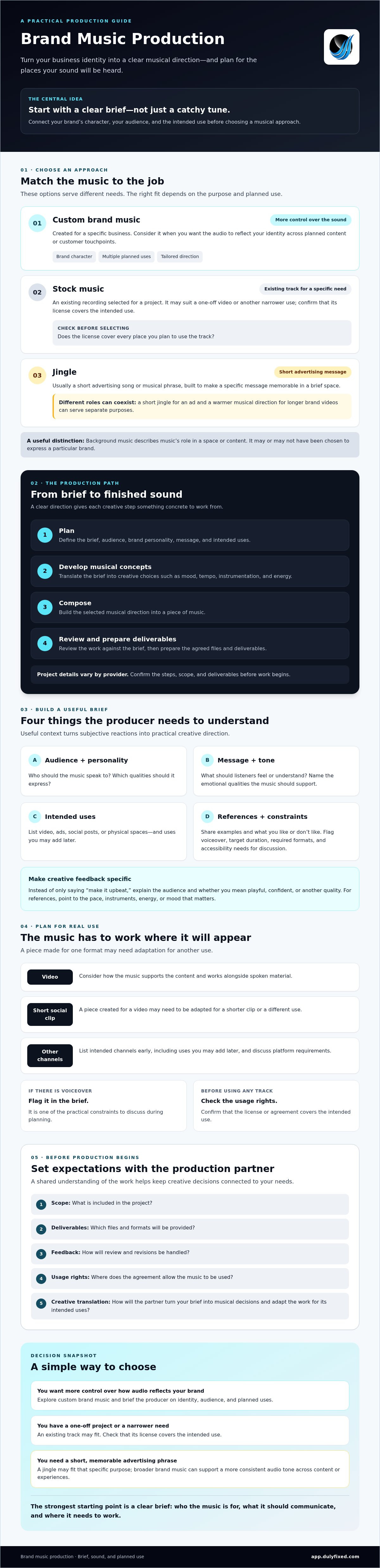
Brand music production works best as a series of creative decisions grounded in a clear brief. The process may include planning, developing musical concepts, composing, reviewing, and preparing agreed deliverables. Steps, scope, and files vary by provider, so confirm them before work begins rather than assuming every project follows the same format.
A useful brief connects four things: the audience, the brandâs personality, what the music should communicate, and where it will be used. âMake it feel upbeatâ leaves room for interpretation. Describing the audience and the qualities behind âupbeat,â such as playful or confident, gives the producer a more workable direction.
What Should a Brand Music Brief Include?
Give the producer useful context, not just a list of sounds you like. Include:
- Audience and personality: Who should the music speak to, and what traits should it express?
- Message and tone: What should listeners feel or understand? Name the emotional qualities you want the music to support.
- Intended uses: Note whether itâs for video, ads, social posts, or a physical space. Include uses you may add later.
- References: Share examples and explain what appeals to you, such as the pace, instruments, energy, or overall mood. Clarify what you donât want, too.
- Practical constraints: Flag voiceover, target duration, required formats, and accessibility needs for discussion.
These details turn subjective reactions into useful direction. Research from Texas A&M University explored how music affects consumers, including its relationship to attention and emotional response. The practical takeaway is to choose music for its fit with the message and context, not just because it sounds good on its own.
What Happens During Composition and Review?
Concept development translates the brief into musical choices. Mood, tempo, instrumentation, and energy all shape how a piece feels. Composition develops those choices into music, which is then reviewed against the brief and intended use. Feedback is most useful when itâs specific: identify what supports the brand, what feels off, and where the track needs to work alongside speech or visuals.
A project workflow might look like this:
- Define the brief and agree on intended uses.
- Develop a musical direction based on the brand and audience.
- Compose and review the work against the brief.
- Confirm delivery details, including files, usage rights, and any agreed changes.
Before work starts, ask the provider to confirm scope, review process, timeline, deliverables, and usage rights. If youâre considering custom music with Dulyfixed Small Business Solutions, you can discuss a music project and clarify what you need, whether youâre based in Soap Lake, Ephrata, Moses Lake, Wenatchee, Seattle, or elsewhere.
Custom Brand Music vs. Stock Music: How to Choose
Custom music gives you more control over how a piece reflects your brand. An existing licensed track can be practical when the need is limited or available options fit the project. Custom production isnât necessary for every business or channel. Decide based on how distinctive the sound needs to be, how often youâll use it, and what permissions each option provides.
| Decision factor | Custom music | Existing licensed music |
|---|---|---|
| Brand fit | Creative direction can be tailored to the business and its audience. | Choose from available tracks; the fit depends on whatâs offered. |
| Flexibility | Discuss how the composition could support planned uses and variations. | Options for adapting or reusing a track depend on its license and provider. |
| Best suited to | A distinctive sound intended for repeated or multiple planned uses. | A one-off, temporary, or narrower project with a suitable track. |
| Rights questions | Clarify ownership or license terms and exactly what uses are included. | Check the license for each platform, format, territory, and use. |
When Does Custom Music Make Sense?
Consider custom music if your business wants audio shaped around its identity and expects to use it across planned content, such as videos and ads. It may also be worth exploring if music appears often enough that a consistent creative direction matters. Custom work gives you more influence over mood, instrumentation, and how the piece fits your messaging. It doesnât guarantee recognition, engagement, or sales, so weigh that creative control against your actual needs.
When Can Existing Music Be Enough?
A licensed track may suit a limited campaign or a project where an available option already supports the content. Before publishing, confirm that its terms cover your specific platforms, formats, territories, and uses. Keep a copy of the permission or license details, and ask the provider or rights holder if anything is unclear. For a deeper overview, see Custom Music Licensing for Content Creators. This is practical guidance, not legal advice.
Separate the creative decision from the permissions check. A track can feel right for your brand and still not be cleared for every intended use. Custom music also requires a clear agreement about rights. Compare each option against your actual channel list and confirm the terms before committing or publishing.
How to Prepare Brand Music for Real Business Use
Plan where and how the music will be used before production begins. That list affects creative choices: a track under narration needs room for speech, while music for an in-person experience may need to work without visuals. This planning framework applies whether your business is in Soap Lake, Ephrata, Moses Lake, Wenatchee, or Seattle, or serves a wider audience. The specific channels and requirements depend on the business.
Use this checklist to define the job the music needs to do:
- Priority channels: Identify where the music will appear, such as video, ads, social posts, a website, or a physical space.
- Role of the music: Decide whether it should lead the experience, set a mood, or sit quietly behind a message.
- Other audio: Note voiceover, dialogue, sound effects, or ambient noise that may need to remain clear.
- Requirements: Ask the platform or production partner to confirm the needed formats and technical specifications rather than guessing.
- Permissions and files: Record the approved version, agreed usage terms, and who in your organization is responsible for storing the final files.
Match the Music to Each Channel
A single piece may be used in several places, but each context can change how it needs to work. For a short social video, music may need to support a quick visual message. In a longer video with narration, it should leave room for the spoken content. Review the sound alongside the actual visuals and dialogue, not only as a standalone track. Confirm technical requirements for each intended platform before finalizing delivery.
Keep Brand Audio Consistent as Content Grows
Document the approved musical direction in plain language: the qualities to preserve, the uses the music is cleared for, and any elements future content should avoid. Assign someone to approve audio choices and maintain usage records. This gives staff and creative partners a shared reference as video and marketing work expands, without requiring every project to use identical music.
For broader campaign context, explore Custom Music for Marketing: 2026 Sonic Branding Guide. A practical workflow, whether your team is local or distributed, is to agree on intended uses first, confirm technical and rights details, then keep approved files and decisions organized.
Discuss custom music for your businessChoosing a Brand Music Production Partner and Taking the Next Step
The right production partner should understand your brief, explain how it will guide creative choices, and make project terms clear. A polished sample matters, but so does the conversation behind it. Notice whether the provider asks about your audience and intended uses instead of steering you toward a preset solution. Clear expectations help you assess fit before committing.
Use this checklist to compare providers:
- Listening: Do they ask useful questions and reflect your goals accurately?
- Communication: Can they explain how your brief might shape mood, tempo, or instrumentation?
- Relevant experience: Can they share examples related to your needs, if those examples are available and permitted to share?
- Scope: Are the work, deliverables, feedback process, and timing described clearly?
- Rights: Are permitted uses and usage terms clear in writing?
There isnât one right production process for every project. Ask how the provider handles feedback and what happens if a proposed direction doesnât match your brief. Specific answers are more useful than broad promises.
Questions to Ask Before Commissioning Music
Before starting brand music production, ask what information the provider needs to develop a creative direction and how decisions will be reviewed. Clarify project scope, deliverables, timing, feedback, and usage rights in writing. Request relevant examples only if the provider can share them and has permission to do so. These questions help you understand whatâs included without assuming that every provider offers the same process or terms.
A Practical First Step for Small Businesses
Prepare a one-page brief with your brandâs personality, audience, intended channels, and desired sound. Send the same brief to each provider youâre considering. Compare how clearly they understand your needs, what questions they ask, and whether their proposed scope fits the work. Dulyfixed offers custom music for brands and businesses as an option to explore. Whether youâre in Soap Lake, Ephrata, Moses Lake, Wenatchee, or Seattle, confirm project details and usage terms directly before proceeding.
Start with your goals and intended uses, then discuss whether custom music is the right fit for your business.
Discuss your brand music projectBuild a Sound That Works for Your Business
Strong brand music production starts with a clear purpose, not just a catchy track. Define the audience, the feeling you want the music to support, and the places it will be used. Then decide whether custom musicâs creative flexibility fits your needs or whether an existing licensed track is enough.
Before production, clarify the scope, deliverables, review process, usage rights, and technical requirements. Test the music alongside the real content, especially if it needs to sit under dialogue or voiceover. Keep approved files and usage details organized so your team can make consistent choices as new content is created.
Dulyfixed offers custom music for brands, businesses, and lifeâs biggest moments, as well as professional digital video production. If youâre exploring a project in Soap Lake, Ephrata, Moses Lake, Wenatchee, or Seattle, bring your goals and intended uses into the conversation and confirm the details that matter to your business.
Talk with Dulyfixed about your brand music projectA clear brief is a practical first step. With a thoughtful plan, you can choose an audio direction that fits your brand and works in the places your audience will hear it.
Frequently Asked Questions
What is brand music production?
Brand music production creates or adapts music to express a businessâs identity and shape the intended audience experience. It can mean a custom track for a specific campaign or a recurring musical direction across different content. The right scope depends on the brand, audience, and planned channels. It isnât automatically a jingle, and commissioning music alone doesnât guarantee increased recognition, engagement, or sales.
What should I include in a brand music production brief?
Describe your business, audience, brand personality, and the feeling you want the music to convey. List intended channels, such as video, ads, and social posts, and note whether the music must work alongside voiceover or dialogue. Include reference examples and explain what you like about them. For businesses in Soap Lake, Ephrata, Moses Lake, Wenatchee, or Seattle, a clear brief can also explain local audience and channel needs.
Can a small business use stock music instead of commissioning custom music?
Yes. Existing licensed music may suit a limited project or a straightforward need, especially if an available track fits the content. Custom production may make sense if you want greater control over the musical direction or need music tailored to several planned uses. Neither option is automatically right for every business. Check the applicable license terms for your specific platforms, formats, and uses before publishing.
How long does brand music production take?
Timing depends on the provider, project scope, feedback process, and agreed deliverables. Dulyfixedâs available information doesnât specify a standard production timeline, so donât assume one. Before commissioning music, ask for the expected schedule, when your team needs to provide feedback, and what could affect delivery. Have the timing confirmed in writing along with the project scope, deliverables, and other expectations.
Who owns the rights to custom brand music?
Ownership and permitted use depend on the written agreement between the business and music provider. Donât assume commissioning a track automatically transfers all rights or permits every use. Ask which channels and uses are covered, whether restrictions apply, and how future edits or reuse are handled. Review and confirm the terms with the provider before releasing the music. If you need legal guidance, consult a qualified professional.
Can brand music be used in social media videos and advertisements?
Music can be created or selected for social videos and ads, but permission depends on the applicable rights and license terms. Name the platforms and formats in your brief, then confirm that the agreement covers each intended use before publishing. Check how the music will sit alongside voiceover or other audio. Dulyfixed offers custom music and digital video production; confirm project scope and usage terms directly.
Talk With Dulyfixed
If this article connects with something you are trying to improve, send a note about your website, marketing, search visibility, or AI discovery goals.