
Published October 31, 2026 Updated November 9, 2026
A financial advisor website in Seattle should clearly explain an advisorâs credentials, fiduciary status, compensation, and meeting options. A fiduciary is legally obligated to put a clientâs interests ahead of their own. Fee-only advisors are paid by clients and donât earn commissions from product sales or referrals. Meeting formats vary by practice and may include in-person, virtual, or phone appointments.
A polished profile alone wonât show whether an advisorâs approach and availability suit your needs. This guide explains what to look for in credentials and how to compare meeting formats, so you can assess the details before deciding whom to meet.
Key Takeaways
- Look beyond titles: understand what an advisorâs credentials represent and how they relate to the guidance you need.
- Compare meeting formats by considering travel, privacy, technology, and how you prefer to communicate.
- Ask how an advisor handles first meetings and ongoing reviews so the process fits your schedule.
- Financial professionals who need a focused online presence can explore how Landing Page Development can present their services clearly.
Advisor credentials
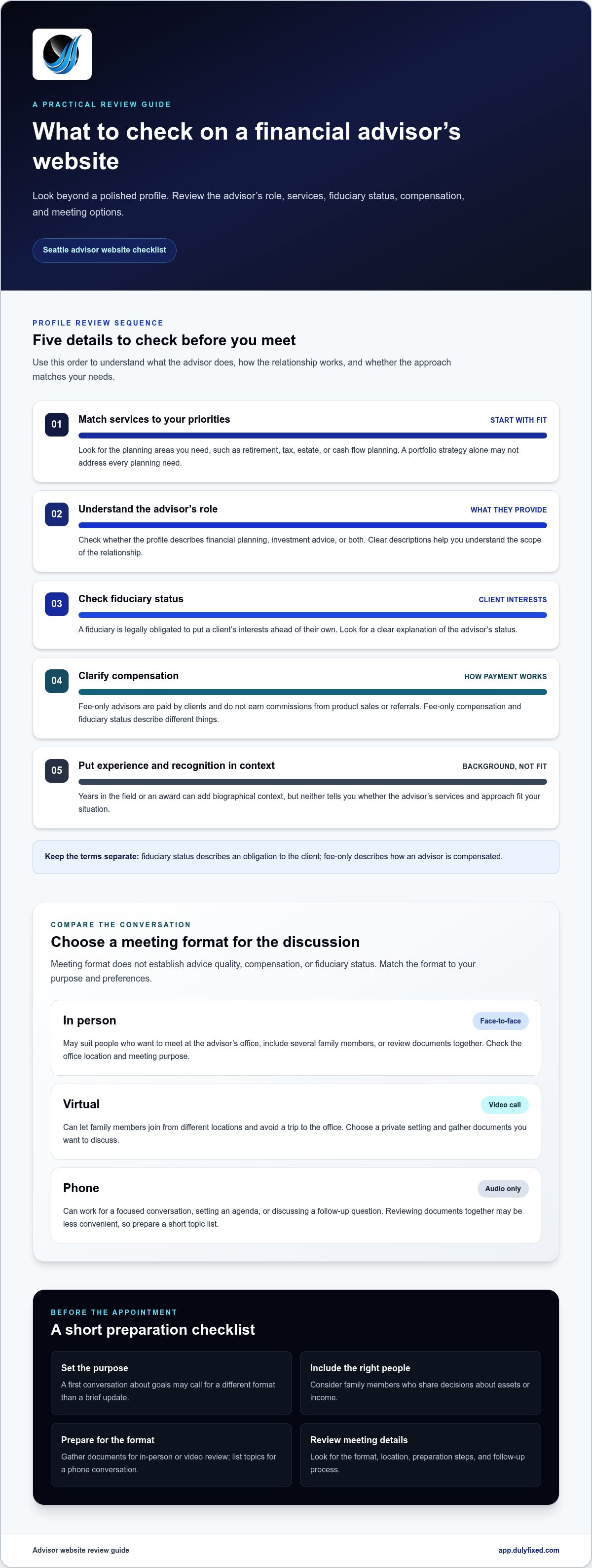
A financial advisorâs website can help you assess their experience, professional role, and approach to planning. In Seattle, look beyond a polished biography. Check whether the advisor clearly explains their education, services, compensation, and relationship with clients.
Experience is one useful point of comparison, but it doesnât describe every part of an advisorâs work. Tim Truebenbach has over 20 years of experience as a financial planner. That detail tells you about his time in the field, not whether his planning approach fits your situation. Consider whether the advisorâs stated focus matches your needs, such as retirement planning, tax planning, estate planning, or cash flow management.
Recognition can add context, but it differs from a professional credential. Morgan Stanley advisor Jack Almo was named to Forbesâ Best-in-State Wealth Advisors list each year from 2020 through 2023. Treat that recognition as one biographical detail, not a substitute for understanding the services and relationship an advisor offers. A portfolio strategy for retirement, for example, may not address estate or tax planning.
Pay close attention to how the site explains fiduciary status and compensation. A fiduciary is legally obligated to put a clientâs interests ahead of their own. Fee-only advisors are compensated only by clients and donât earn commissions from product sales or referrals. These terms describe different aspects of an advisorâs work, so donât treat them as interchangeable.
- Review the advisorâs role. Does the profile describe financial planning, investment advice, or both?
- Match services to your priorities. Look for clear descriptions of wealth management, retirement planning, tax planning, estate planning, and cash flow support.
- Understand compensation. Note whether the site explains fee-only compensation or another arrangement.
- Separate recognition from fit. An award or long career history doesnât show whether the advisorâs approach suits your goals.
Investment products arenât insured by the FDIC, NCUA, or any federal agency. They involve investment risks, including possible loss of principal and fluctuations in value. A useful advisor profile explains the planning relationship and investment approach, rather than relying on credentials or awards alone. Use those details to prepare focused questions about your financial situation and the services you need.
In-person, virtual, and phone meetings
Seattle financial advisors may offer in-person, virtual, or phone meetings, depending on the practice. A financial advisor website in Seattle should make these options easy to find. Compare formats based on your needs, not as a measure of advice quality.
An in-person meeting gives you a face-to-face conversation at an advisorâs office. It may suit families who want to include several members in a planning discussion, or individuals who prefer reviewing documents together. Before scheduling, note the office location and meeting purpose, such as discussing income, assets, or financial goals.
A virtual meeting takes place through video conferencing. It can let family members join from different locations and help you meet without traveling to an office. Before the appointment, choose a private setting and gather any documents you want to discuss. Reviewing a portfolio may be easier when everyone can view the same material during the call.
A phone meeting uses audio rather than video. It can work well for a focused conversation, such as setting an agenda or discussing a follow-up question, but may be less convenient for reviewing documents together. If you have several topics, make a short list beforehand and ask whether written materials can support the discussion.
Use these steps to compare an advisorâs meeting options:
- Identify the purpose. A first conversation about financial goals may need a different format than a brief update.
- Consider who should attend. Include family members who share decisions about assets or income.
- Match the format to the discussion. Document review may work better by video or in person than by phone alone.
- Read the meeting details. Look for format, location, preparation steps, and follow-up process.
Meeting format doesnât establish an advisorâs compensation or fiduciary status. Review those details separately, then use the meeting to explain your situation and priorities. For example, ask about wealth management, income planning, or how the advisor communicates after an appointment. A financial advisor website in Seattle can help you prepare by outlining the practiceâs services and meeting process. If youâre refining how your own practice presents its services online, you can also discuss your website project.
Dulyfixed Small Business Solutions: Landing Page Development
Dulyfixed Small Business Solutions develops landing pages for financial advisors who need a focused, clear online presence. A dedicated page can explain your planning services, describe meeting options, and help prospective clients understand what to expect before reaching out.
Consider Landing Page Development when your current website makes key details hard to find or lacks a clear path from learning about your services to contacting your firm. Structure the page around your audience and purpose, with concise information about your approach, areas of focus, and next step. An SEO-ready site structure can keep information organized as your online presence grows, while Managed Web Hosting supports the website.
For a practical next step, contact Dulyfixed Small Business Solutions to discuss a landing page for your financial advisory practice.
Make Your Next Website Step Clear
Before changing your site, look at it as a prospective client would. Start at the homepage and try to find the information someone needs to decide whether to contact your practice. Note confusing labels, missing details, or steps that interrupt the path. A financial advisor website in Seattle should make that journey straightforward, without asking visitors to guess where to go next.
Choose one clear improvement to tackle first. A focused review can help turn a broad concern into a practical website project.
Contact Dulyfixed Small Business Solutions
Take the next step when youâre ready to make your site easier to use.
Talk With Dulyfixed
If this article connects with something you are trying to improve, send a note about your website, marketing, search visibility, or AI discovery goals.