
Published November 7, 2026 Updated November 9, 2026
What happens after you approve a design can matter as much as the design itself. The most useful questions to ask a web developer before hiring cover project stages, platform choice, launch checks, and how the developer learns about your business. Clear answers help you understand what youâll contribute, how decisions are made, and what support continues after launch.
You likely already know a website should look professional and work well on phones. The harder part is finding out whether the process will produce a site that fits your offers and gives customers a clear next step. This guide covers practical questions about design and launch, content management systems, site management, and business discovery, so you can compare approaches and spot gaps before work begins. It also helps you distinguish a polished pitch from a workable plan.
Key Takeaways
- Review a developerâs work and ask how the design, build, testing, and launch stages fit together.
- Clarify what youâll need to provide, how revisions work, and what support continues after launch.
- Choose a platform based on the siteâs features, how youâll update it, and the upkeep it requires.
- Look for a discovery process that connects your business goals and customer needs to the siteâs structure and next steps.
1. What is the design and launch process like?
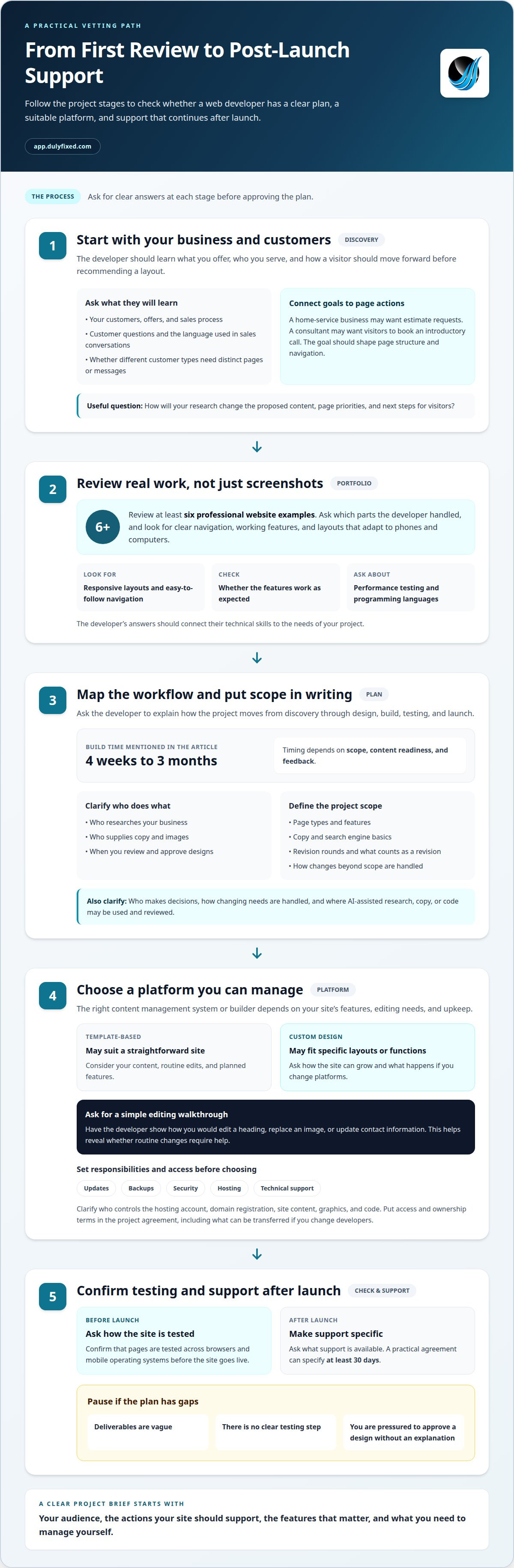
A useful set of questions to ask a web developer before hiring starts with recent work, not polished screenshots alone. Review at least six professional website examples, then ask which parts the developer handled. Look for clear navigation, working features, and responsive layouts that adapt to phones and computers. Ask how they test performance and which programming languages they use. Their answers should connect technical skills to your project.
Next, ask the developer to map the workflow from discovery to launch. A typical build can take four weeks to three months, depending on scope, content readiness, and feedback. Clarify who researches your business, who supplies copy and images, and when you approve designs. Ask how the developer tests pages across browsers and mobile operating systems before launch.
Define the scope in writing: page types, features, copy, search engine basics, and revision rounds. For example, a service page may need a clear offer, useful details, and a direct contact path. Ask what counts as a revision and how changes beyond the agreed scope are handled. This keeps design decisions tied to business goals instead of letting the project expand without a clear plan.
Warning signs include vague answers about deliverables, no clear testing step, or pressure to approve a design without an explanation. Ask what support is available after launch; a practical agreement can specify at least 30 days. If the developer uses AI for research, copy, or code, ask where it fits and who reviews the output. Also clarify who makes decisions and how the process handles changing project needs.
2. Website platform selection
Choose a platform based on the tasks your website must handle. A service business that updates staff bios and service pages has different needs from a shop managing products. Ask which content management system or builder the developer recommends, why it fits, and what tradeoffs it involves. The answer should explain how youâll make updates and support ongoing improvements.
Industry experience matters when it helps the developer understand your customers and common site features. Ask for examples from businesses with similar needs, such as appointment requests or detailed service pages. Then ask the developer to demonstrate how youâll edit a heading, replace an image, or update contact information. A live walkthrough can show whether routine changes require help.
Clarify maintenance and hosting responsibilities before choosing a platform. Ask who manages updates, backups, security, and technical support after launch. Also establish who controls the hosting account, domain registration, site content, graphics, and code. Put access and ownership terms in the project agreement so you know what can be transferred if you change developers.
A template-based design can suit a straightforward site, while custom website design may better fit specific layouts or functions. Neither choice alone determines quality; the fit depends on your content, editing needs, and planned features. Ask how the site can grow and what happens if you change platforms. If dependable hosting and ongoing site care are priorities, explore hosting and maintenance support as part of your platform decision.
3. Understanding a prospective web development partnerâs business discovery process
A developerâs discovery process should connect your business goals to site decisions. Ask what theyâll learn about your customers, offers, and sales process before recommending a layout. For example, a home-service business may need visitors to request an estimate, while a consultant may want them to book an introductory call. The goal should shape the siteâs structure.
Ask how the developer will identify the action each page should support. Will the homepage explain your main offer or guide visitors toward a service page? How will navigation help a first-time visitor find pricing details, service areas, or contact options? A useful discovery conversation turns these business details into clear page priorities, not just a list of design preferences.
Find out what research informs the recommendations. A developer might review your existing site, customer questions, competitor positioning, or the language you use in sales conversations. Ask how those findings shape the proposed content and what information they need from you. If you serve different customer types, discuss whether each needs a distinct page or message.
Lead generation deserves specific attention. Ask whether the proposed site considers a funnel, a downloadable resource, or another useful way to turn visitor interest into an inquiry. A free guide can suit a business with advice to share; a direct contact form may work for a simpler service offer. The right approach depends on your audience and what you can maintain.
Before approving a package, ask the developer to explain how discovery findings shape its scope and priorities. A strong fit means the recommendations reflect your actual goals, rather than forcing every business into the same template. If a proposal skips customer needs and jumps straight to colors, ask for the reasoning behind its structure before moving ahead. To discuss your website goals, contact Dulyfixed.
Dulyfixed Small Business Solutions
Choosing a website process and platform starts with clear goals. Decide what the site needs to do, who it needs to reach, and which features matter. A focused page may suit a single service or offer, while a larger site may need room for more content and functions. Consider how the site will be maintained after launch, too.
Bring your priorities, audience, and must-have features into the discussion. That gives the project a useful starting point, whether youâre planning a new site or improving an existing one. Compare options based on your needs before choosing a process or platform.
Contact Dulyfixed Small Business Solutions to discuss your website goals.
Turn your priorities into a clear project brief
The questions to ask a web developer before hiring matter most when they help you make a sound decision. Before taking the next step, write down what your website needs to help customers do and what you need to manage yourself. Note the pages, content, and features that matter most. This gives a developer a practical starting point and keeps recommendations tied to your business goals.
When you discuss the project with a developer, share your priorities and ask which services can address them. Clarify what each service includes, what you will need to provide, and how the work will fit your website plans. This can help turn your notes into a defined project.
Contact Dulyfixed Small Business Solutions
A clear brief is a useful first step toward a website that fits your business.
Frequently Asked Questions
What is the design and launch process like?
A clear process defines how you approve key decisions and accept the finished site. Ask what youâll review before launch, such as page layouts, mobile views, and final copy. Agree on who gives final approval and how urgent changes are handled. This gives both sides a shared way to resolve feedback without relying on assumptions.
What platform do you build on?
The platform should match your siteâs features, editing needs, and maintenance plan. Dulyfixedâs own website uses custom PHP, but that doesnât mean the same platform suits every customer. Ask which platform is proposed for your project and how youâll update common content. For example, a business serving customers in Soap Lake and Ephrata may need to manage separate service-area pages.
What are some current design trends, and do you recommend them?
Trends such as oversized headings, bold color, and motion effects can add personality, but they should serve a purpose. Ask how each choice supports readability, navigation, or your brand. For instance, an animation that delays access to a contact form may distract from the pageâs goal. Favor design decisions that help visitors understand what you offer and what to do next.
What is included in the scope of the work?
The scope should name the agreed deliverables and clarify what falls outside them. Ask whether the proposal covers copywriting, image selection, forms, redirects, and post-launch changes. Also clarify how the team handles a new feature requested midway through the project. A written change process helps you understand how added work affects responsibilities and approval before it begins.
What SEO strategies do you use and what is included?
Ask which search-related tasks are part of the build and which require ongoing work. A useful foundation can include an SEO-ready site structure, clear page topics, descriptive headings, and navigation that helps visitors find relevant information. Ask whether the agreed scope includes an SEO-ready site structure. Treat these steps as a foundation, not a promise of rankings, traffic, or leads.
Talk With Dulyfixed
If this article connects with something you are trying to improve, send a note about your website, marketing, search visibility, or AI discovery goals.