
Published November 12, 2026
More sections won’t make a landing page more persuasive; a clearer next step will. Effective landing page design for a small business starts with one audience, one offer, and one action, then organizes the page to make that action easy to understand.
You already know visitors need a reason to stay and a clear way to respond. The challenge is deciding what to show first, what to leave out, and how a landing page should differ from the rest of your website.
This guide explains how to plan the page, shape its message, and choose a structure that leads visitors from the headline to the call to action. It also covers how focused content, relevant visuals, and mobile-friendly design support the page’s goal.
Key Takeaways
- Choose one audience, offer, and action to keep the page focused.
- Shape the message around the visitor’s goal, not the navigation needs of a homepage.
- Plan a page sequence that builds understanding and makes the next step clear.
- Use a small-business landing page service when you need help turning that plan into a working page.
How to design a landing page?
Start with one visitor goal, then align the message, page content, and next step. Effective landing page design for a small business connects a clear offer with an action visitors can understand and take.
Value Propositions and Customer Benefits
Explain the outcome customers want, not just the features you provide. For example, a dog trainer could describe how lessons help owners build calmer daily routines. Then connect that benefit to a specific action, such as “Book a training session.” Good landing page design for small businesses makes the offer and its value clear before visitors act. Costs depend on project scope, copy, design, and features.
Calls to Action and Conversion Goals
Choose the conversion goal before writing the call to action. A service business might seek booking requests, while a consultant may want qualified leads. There’s no single typical conversion rate for small businesses; results depend on traffic intent, the offer, and how clearly the page explains its value. Track the action that matches the goal, not clicks alone.
Lead Forms, Booking, and Payment Options
Match each form or transaction option to the action visitors should take. A lead form can collect a name and details needed for a useful reply. Avoid asking for 15 fields when fewer will do. Use booking or payment options when they fit the offer, and explain what happens after submission. Keep the steps usable on mobile.
Common Design Mistakes and Risks
Competing calls to action can send visitors toward different outcomes. Too much navigation, unrelated visuals, or decorative colors can distract from the offer. Before publishing, test the main action on a phone and check every link, form, and confirmation message. A broken booking step can prevent visitors from completing the intended action.
How do landing pages differ from other website pages?
A landing page narrows attention to a specific campaign goal, while other pages serve broader needs. The right page depends on what visitors need to do next.
Landing Pages, Homepages, and Product Pages
A homepage introduces a business and helps visitors navigate its main sections. A landing page usually serves one audience and one action, such as requesting a quote for a particular service. Product pages explain an item’s features and buying details, while campaign landing pages focus on a specific offer. Choose the page that matches the visitor’s intent.
Templates can speed up layout planning, but keep the headline, buttons, visuals, and social proof relevant to the offer. A homepage may need several navigation choices; a landing page often removes extra routes that compete with its goal.
Landing Pages and Websites
A website is a collection of connected pages, such as a homepage, service descriptions, and contact details. A landing page is one page within that wider experience, or a standalone destination for campaign traffic. Its focused layout helps visitors act without browsing the whole site.
After a form submission or booking, a thank-you page confirms what happened and explains the next step. It can state a response window, such as within 24 hours, when that timing is accurate. Clear confirmation helps visitors know whether to expect an email, call, or other follow-up.
If a campaign needs its own focused destination, you can discuss a landing page project.
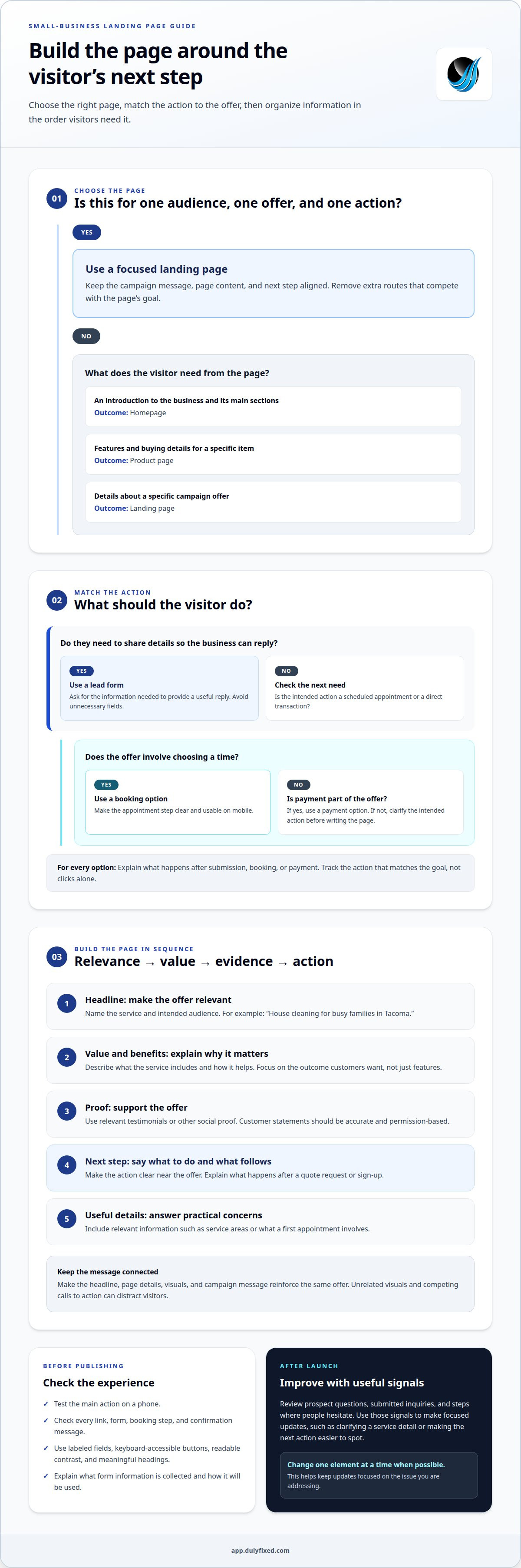
Recommended small-business landing page structure
Organize sections in the order a campaign visitor needs information: relevance, value, evidence, then action. For a local service, connect the headline and page details to the audience’s specific need.
- Headline: Name the service and intended audience. A home-cleaning campaign might begin, “House cleaning for busy families in Tacoma.”
- Value and benefits: Explain what the service includes and how it helps. Keep the message consistent from the ad to the page.
- Proof: Add relevant testimonials or other social proof that supports the offer. Use accurate, permission-based customer statements.
- Next step: Place a clear button near the offer. Say what happens after visitors request a quote or sign up.
- Useful details: Address practical concerns, such as service areas or what a first appointment involves.
For accessibility, use labeled form fields, keyboard-accessible buttons, readable contrast, and meaningful headings. For privacy, explain what a form collects and how the business will use the information before visitors submit their details.
For local SEO, use accurate service and location wording in the headline, page title, and visible content. Include useful local details, but avoid repeating city names where they don’t help visitors.
Sketch the sections before building page templates. Check that each section supports the campaign message and that testimonials and visuals don’t distract from the next step. Keep the layout easy to scan on a phone, then test the form and buttons before publishing.
A landing page outline should describe what the page will feature and how it will look. Key design elements include a headline, text blocks, CTA buttons, images, and testimonials. Consider how they work together: keep the headline and text clear, make the CTA easy to notice, and choose images and testimonials that reinforce the offer without competing for attention.
Dulyfixed Small Business Solutions
Dulyfixed Small Business Solutions helps small businesses turn a campaign goal into a clear, useful landing page. Its landing page development can bring the message, page structure, and visitor action together around your audience.
When a campaign needs a strong mobile experience or a better foundation for search, mobile-first design and an SEO-ready site structure can support the page. Managed hosting and digital video production may also fit the project’s needs. Dulyfixed offers landing page development alongside these services, with the focus on a page that fits the offer, provides relevant information, and makes the next step clear.
Contact Dulyfixed Small Business Solutions to discuss your landing page.
Keep improving the page after launch
Publishing the page is the start of learning how well it serves your audience. Treat landing page design for a small business as an ongoing process: review the questions prospects ask, the inquiries they submit, and any steps where they hesitate. Use those signals to guide focused updates, such as clarifying a service detail or making the next action easier to spot.
Change one element at a time when possible, then assess whether the quality of inquiries improves. More traffic alone doesn’t show whether the page is attracting the right people.
A clear page gives visitors a practical path forward. Keep refining that path as you learn what your customers need.
Get It DulyfixedFrequently Asked Questions
What makes an effective small business landing page?
An effective page matches the visitor’s reason for arriving with a clear, relevant next step. For example, if an email promotes a seasonal service, the landing page should explain that same service rather than send visitors to a general company overview. Review inquiry quality as well as submission volume; a page should attract people who fit the business’s actual offer.
What sections should a small business landing page include?
Include details that help visitors decide, based on the questions they raise before buying. A home-repair business might explain which problems it handles, where it works, and what information helps prepare for an estimate. A short FAQ can address remaining concerns. Leave out sections that don’t help visitors understand the offer or decide whether to take the next step.
How much does small business landing page design cost in the US?
Costs depend on project scope, copy, design, and features.
Website design and landing pages
Plan pages around the information visitors need and the action they want to take.