

Published October 12, 2026
A shopper taps your product page on a phone, but the main image takes too long to appear and the checkout button is hard to use. Thatâs where mobile site speed in Wenatchee becomes more than a test score: it can affect whether a visitor reaches the action you want.
Itâs reasonable to be cautious. Speed reports can be confusing, and technical fixes may seem expensive or risky when youâre not sure whatâs causing the problem. Start with the mobile journey, not the score alone.
This guide explains how to check real-world performance, use speed tests to spot likely bottlenecks, and prioritize fixes based on what shoppers need to do. Youâll learn what to address first, when broader page design or hosting support may help, and how to choose a practical next step for your Wenatchee retail site.
Key Takeaways
- Assess mobile speed by checking how key pages load and respond during real shopping tasks, not by relying on a score alone.
- Use Google PageSpeed Insights to compare diagnostic lab results with field data from actual visitors.
- For mobile site speed in Wenatchee, prioritize the issue that gets in the way of a customer action, then retest after making a change.
- Investigate images, scripts, page structure, or hosting as possible bottlenecks before choosing a fix.
Why Mobile Site Speed Matters for Wenatchee Retailers
Mobile site speed includes how quickly a page appears and how smoothly it responds when someone uses it on a phone. A page may show its first content quickly but still feel frustrating if buttons lag, text shifts, or menus are hard to use. The Mobile web has its own design constraints, so assessing mobile site speed in Wenatchee means looking at both loading and usability. A practical mobile site speed wenatchee review should focus on what visitors experience, not just a test score.
For a retailer serving Wenatchee, a mobile visit may start with a simple task: check todayâs hours, look for a product, compare details, get directions, or call the store. If important information is buried in a crowded menu or appears only after a delay, the visitor has to work harder to finish that task. Clear navigation and visible contact options matter alongside technical speed.
What a Wenatchee customer needs from a retail page on mobile
Picture a shopper checking whether an item is available before making plans. They need to find product details without pinching and zooming through a desktop-style layout. Another visitor may need the storeâs location or phone number right away. If a banner covers the page, a menu is confusing, or a key button responds slowly, either task can stall. These are practical usability problems to test, not claims about how local shoppers behave.
For Wenatchee retailers, improving mobile site speed starts with making the path from opening a page to completing a useful action easier. Dulyfixed Small Business Solutions's mobile-first website design can be relevant when page layout or structure needs broader work. Faster loading alone doesnât guarantee higher rankings, more leads, or increased revenue. Treat it as one part of a helpful mobile experience, then assess whether key tasks are easier to complete.
How to Check Mobile Site Speed in Wenatchee and Choose the Right Fix
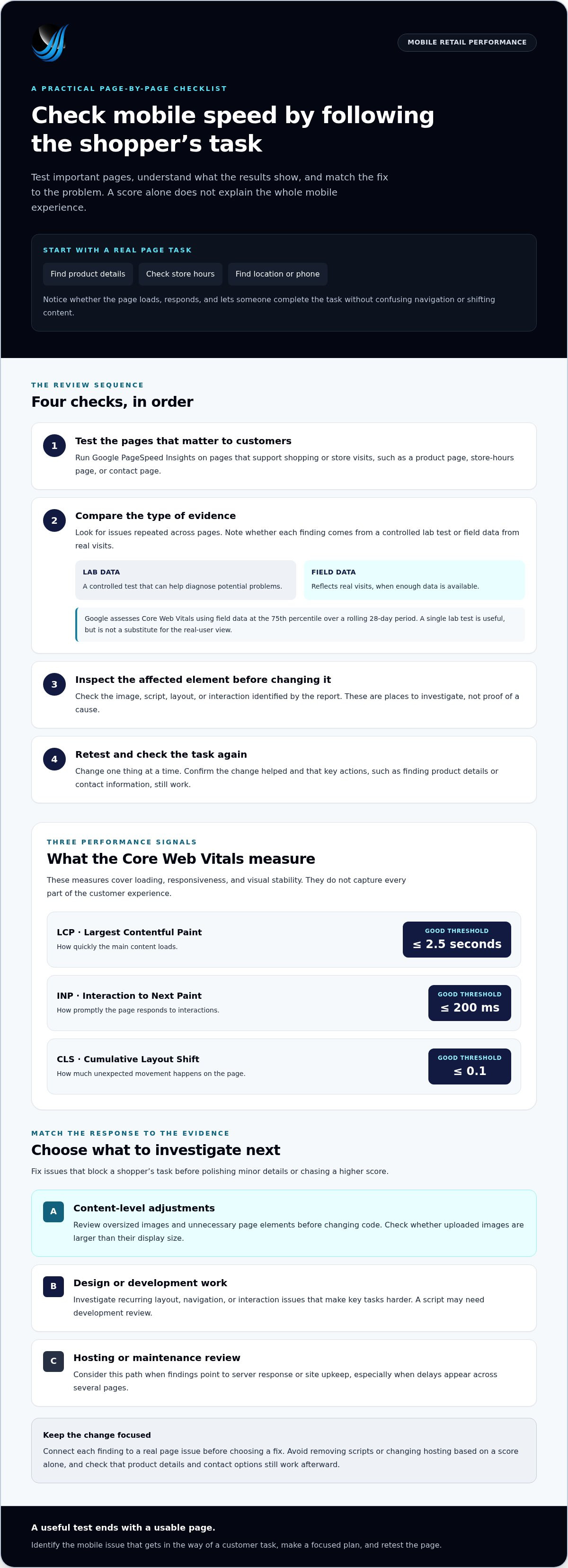
Use the same sequence for each important page: test it, compare the findings, inspect whatâs slowing or disrupting the page, then retest after a change. Start with pages tied to customer tasks, such as a product page, store-hours page, or contact page. Google PageSpeed Insights provides lab diagnostics and, when available, field data. A mobile site speed Wenatchee review should focus on what visitors experience, not just the reportâs score.
- Test key pages. Run PageSpeed Insights on the pages that support shopping and store visits.
- Compare results. Look for issues repeated across pages, and note whether findings come from lab or field data.
- Inspect the affected element. Check the image, script, layout, or interaction identified by the report before choosing a fix.
- Retest after changes. Confirm the change helped, and make sure key page tasks still work.
Lab data comes from a controlled test and helps diagnose potential problems. Field data reflects real visits collected through the Chrome User Experience Report, when enough data is available. Google assesses Core Web Vitals using field data at the 75th percentile over a rolling 28-day period. A single lab test is useful, but it isnât a substitute for that real-user view. Googleâs mobile speed measurement guidance also provides context for testing performance.
Which mobile performance signals should a small retailer review?
Googleâs Core Web Vitals guidance defines three signals: Largest Contentful Paint (LCP) measures how quickly the main content loads; Interaction to Next Paint (INP) measures how promptly a page responds to interactions; and Cumulative Layout Shift (CLS) measures unexpected movement on the page. âGoodâ thresholds are LCP at or below 2.5 seconds, INP at or below 200 milliseconds, and CLS at or below 0.1. They indicate loading, responsiveness, and visual stability, but donât capture every part of the customer experience.
Fix problems that block a shopperâs task before polishing minor visual details or chasing a higher score. If interpreting the findings or making a change feels uncertain, discuss mobile website performance support.
Improve Mobile Site Speed for Wenatchee Customers with a Practical Plan
Match each fix to what your test actually found. Start with changes you can review safely, such as reducing unnecessary content or checking whether uploaded images are larger than their display size. Image dimensions and formats, scripts, and page structure are useful places to investigate, not proof of a cause. Change one thing at a time, then retest the page and confirm its key actions still work.
Some findings need technical work. A script may require development review, while repeated delays across several pages may call for a closer look at hosting or site maintenance. Avoid removing scripts or changing hosting based on a score alone. Connect the finding to a real page issue first, then weigh the fix against the risk of disrupting product details or contact options. Keep the work focused on the evidence.
- Content-level adjustments: Review oversized images and unnecessary page elements before changing code.
- Design or development work: Investigate recurring layout, navigation, or interaction issues that affect key tasks.
- Hosting or maintenance review: Consider this path when findings point to server response or site upkeep rather than page content.
When mobile speed calls for design or technical support
If the page structure makes product details or store information difficult to find, broader redesign may be more useful than isolated speed tweaks. Dulyfixedâs mobile-first website design and landing-page development can address layout and usability needs. If diagnosis points to hosting or ongoing maintenance, managed hosting and technical support may be the relevant focus. Choose the scope that matches the findings, not every possible fix.
Once youâve identified the main issue and the page it affects, discuss a mobile website project.
Turn Your Mobile Speed Findings into a Clear Next Step
Choose one mobile issue that gets in the way of a customer task and make a focused plan to address it. The right next step depends on what your checks reveal: a page that needs a clearer structure may call for design work, while findings tied to hosting or maintenance point toward technical support. Keep the goal practical. Make the mobile experience easier to use, then review whether the change helped.
For retailers considering mobile site speed in Wenatchee, a specific page and a clear performance concern are a useful starting point for a project discussion with Dulyfixed Small Business Solutions.
Ready to improve your performance? Reach out to Dulyfixed Small Business Solutions to discuss a mobile website project today.
Take the next step at a pace that fits your business, and keep moving toward a smoother experience for your customers.
Frequently Asked Questions
Does a faster mobile website guarantee better local search rankings?
No. A faster site can improve the experience people have on your pages, but speed alone canât guarantee a higher local ranking. Search visibility also depends on whether a page matches a searcherâs needs and other factors. For mobile site speed in Wenatchee, treat performance work as one part of a broader effort to make useful, relevant store information easy to access.
Can a mobile site feel slow even when a speed test score looks good?
Yes. A summary score may not reflect every task a shopper tries to complete. For example, a page might appear quickly, yet its product filters or add-to-cart control may respond slowly on a particular phone. Test the actions customers use, not just the pageâs first appearance, and look for problems that occur on the devices your visitors rely on.
How often should a small business retest its mobile website speed?
Retest after changes that could affect page behavior, such as adding a new promotion, installing a third-party tool, or changing the product catalog. Also revisit performance as part of routine site upkeep so problems donât go unnoticed. Thereâs no single schedule that fits every retailer; choose a reminder that matches how often your site changes and how important its key pages are.
Do images always cause a slow mobile website?
No. An image can contribute to a delay, but it isnât automatically the cause. A product page with modest images might feel sluggish because a script or other page element is delaying an important action. Compare the affected pages and inspect the specific diagnostic finding before changing image quality or removing visual content shoppers need to evaluate products.
Talk With Dulyfixed
If this article connects with something you are trying to improve, send a note about your website, marketing, search visibility, or AI discovery goals.