

Published November 27, 2026
A ranking snapshot won’t tell you what to fix next. A local SEO audit for a small business reviews its Google Business Profile, website, local visibility signals, and technical foundations to uncover issues and prioritize practical improvements.
The challenge is turning scattered findings into a usable plan. This article explains what an audit covers, what information to prepare, and how findings can guide profile updates, team workflows, and reporting. It also shows how to establish a baseline so later reports can support clear decisions.
Key Takeaways
- Learn which Google Business Profile details a professional reviews and how those findings can shape practical improvements.
- See how consistent business name, address, and phone details support a clearer local presence across online listings.
- Turn audit findings into assigned tasks, priorities, and a reporting workflow that makes progress easier to track.
- Understand what information to provide and when SEO support can help move audit recommendations into action.
Google Business Profile optimization
A professional audit checks whether the profile represents the business accurately and connects clearly to its website and Maps presence. It documents useful updates and potential policy concerns before recommending changes.
-
Review the Business Name and Categories
Compare the profile’s business name with the name used in day-to-day operations and customer communications. Review each category against the services the business actually provides. A professional flags promotional wording or categories for unrelated services, rather than adding terms just to attract more searches. Accurate details help customers understand the business before they call or visit.
-
Review Maps Listings and Connected Tools
Compare the profile with its Google Maps listing and linked website. Check whether customers reach a relevant page and whether key details, services, and hours match across those destinations. Review which profile fields are complete and need updating. Google Analytics can show activity on the linked site, while Search Console can help assess search queries, clicks, and technical signals. Together, these tools add context to the profile review.
-
Review Guidelines and Penalty Risks
Check the profile for details that could misrepresent the business, then compare them with its actual services and operations. Inaccurate or misleading information can create profile-compliance risks, so a professional identifies concerns and recommends corrections before changes are made. The audit keeps the profile factual and consistent, rather than adding unsupported claims or search terms to its name. This can help prevent avoidable profile issues.
How Businesses Manage Local SEO
A professional audit compares core business details across directories and listings. It also considers citation accuracy alongside the searches and competitors the business wants to understand.
-
Compare Business Details Across Directories
Start with the business’s approved name, address, and phone number, then compare them across its website and directory profiles. A professional records differences such as an old phone number, a shortened name, or an outdated address, and identifies which listing needs correction. Consistent details help customers recognize the business when they compare local results or search for services “near me.”
-
Verify Listing and Citation Accuracy
Review each listing for accuracy, not just matching text. Check whether the business name, address, and phone number point to the correct location and contact method. Outdated details can send customers to the wrong place or make the business harder to identify. Compare local rankings and listing details with relevant competitors, while treating review ratings as a separate trust signal.
-
Assess Local SEO Audit Costs
For a United States audit, the price depends on the case and is provided after a quote request. Scope, the number of listings reviewed, access to relevant accounts, and the depth of reporting can shape the work involved. A useful proposal should explain which business details, directories, and findings the audit covers, so you can compare the proposed scope with your needs.
If inconsistent listings are difficult to sort through, discuss an audit and reporting plan that fits your business.
Audit workflows and reporting
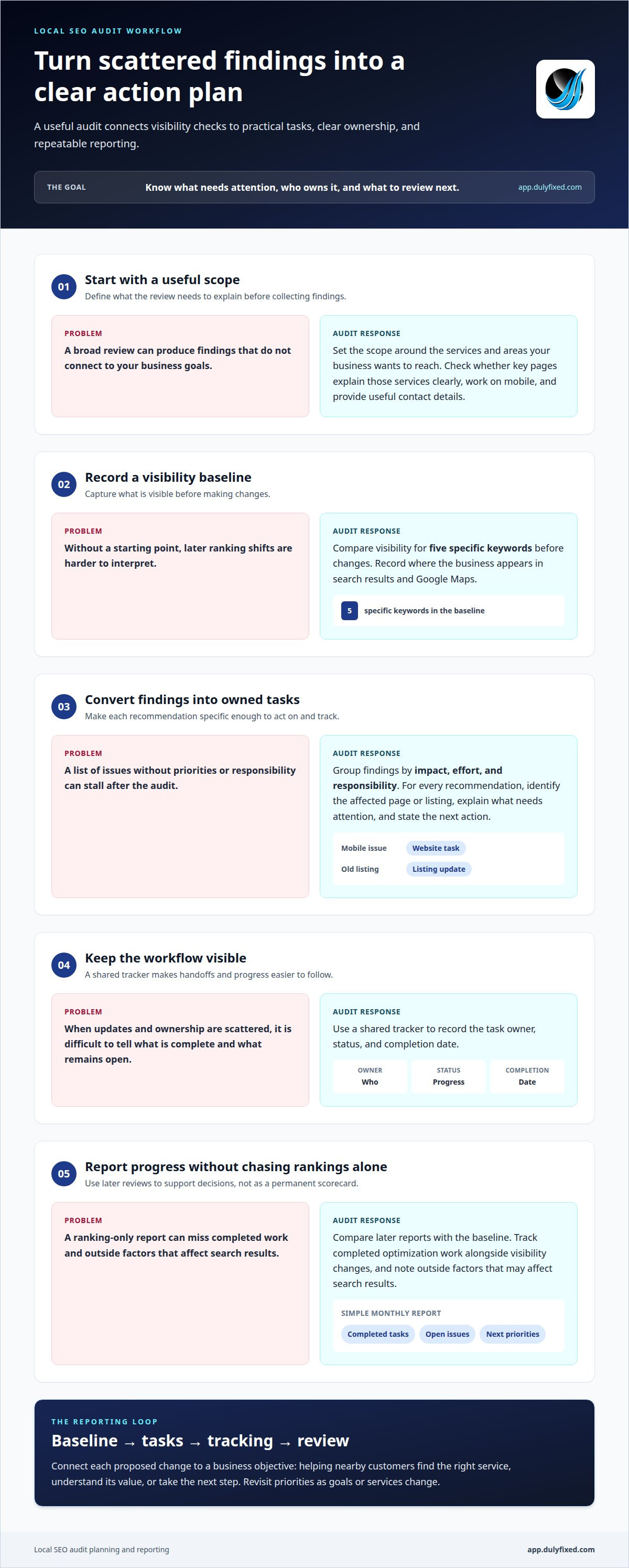
A useful audit turns website findings into prioritized tasks, clear ownership, and repeatable reporting. A professional checks local search visibility on mobile and records a baseline before recommending updates.
A professional reviews local SEO and mobile performance by checking location relevance, page clarity, mobile usability, and technical issues that affect access. An audit can be useful after major website changes, when launching services, or as part of a regular review.
-
Assess Website Local SEO and Mobile Performance
Set the audit scope around the services and areas your business wants to reach. Check whether important pages explain those services clearly, work on mobile, and provide useful contact details. Compare visibility for five specific keywords before changes, then record where the business appears in search results and Google Maps. This baseline helps distinguish ranking shifts from technical or content updates.
-
Organize the Audit Workflow and Reporting
Ask for a report that groups findings by impact, effort, and responsibility. Each recommendation should identify the affected page or listing, explain what needs attention, and state the next action. For example, a mobile contact issue can become a website task, while an outdated directory entry needs an update. A shared tracker can record the owner, status, and completion date.
Use the baseline to compare later reports. Track completed optimization work alongside visibility changes, and note outside factors that may affect search results. A simple monthly report can show completed tasks, open issues, and next priorities without treating rankings as the only measure of progress.
Dulyfixed Small Business Solutions: Local and National SEO
Dulyfixed Small Business Solutions helps businesses turn local SEO findings into a focused improvement plan. Consider professional support when profile, website, and visibility issues overlap, or when audit findings need clear priorities.
Through local and national SEO, the work can address search visibility and practical next steps. If the audit points to a website structure or content issue, website design, redesigns, and landing pages can support a clearer path for local visitors. AI discovery and structured data optimization can also help present business information clearly to search systems.
Bring your audit findings, business goals, and current reporting questions to the conversation. Contact Dulyfixed Small Business Solutions to discuss a useful next step.
Make the Next SEO Decision Count
Use the audit to guide decisions, not as a permanent scorecard. Before approving work, connect each proposed change to a business objective: helping nearby customers find the right service, understand its value, or take the next step. This keeps ongoing optimization grounded in how your business serves customers.
A local SEO audit for a small business is most useful when it informs a choice: which improvement matters now, who owns it, and what evidence will show whether it helped. Focus the next review on that decision instead of chasing every fluctuation in search results. As goals or services change, revisit the priorities and adjust the work.
Get It DulyfixedA clear next step can turn search work into steady progress.
Frequently Asked Questions
What Is a Local SEO Audit?
A local SEO audit is a structured review of how clearly a business appears in local search and how well its online presence serves local customers. Unlike a general website review, it connects search visibility with local intent. For example, it may check whether a service page answers the needs behind a nearby customer’s search.
What does a professional local SEO audit for a small business include?
A professional audit brings profile, website, listing, and measurement reviews together as actionable findings. It should explain the scope, identify dependencies such as website or account access, and distinguish urgent corrections from longer-term improvements. The report is most useful when each recommendation supports a specific business goal.
What key items does a professional check in a local SEO audit?
Check whether customers can find and understand important service pages, whether site navigation leads to relevant information, and whether technical barriers affect access or indexing. A review can also identify duplicated or thin location pages. These checks help distinguish a content gap from a site-structure issue before assigning work.
How does a professional audit and optimize a Google Business Profile?
Compare the profile with the business’s actual operations and the pages customers reach from it. For example, if a profile links to a general homepage but the business offers distinct services, the audit may recommend a more relevant destination. A professional can also identify incomplete information or mismatches that could confuse customers and plan appropriate updates.
How can a professional check local rankings and Google Maps visibility?
Review relevant local searches and record where the business appears in standard results and Google Maps. Account for relevance and distance, since one search view does not represent every customer’s experience. Comparing visibility across services can show whether a specific page or profile detail needs attention, rather than treating every ranking change alike.
Workflow and automation support
Start with a recurring task, the systems involved and what needs to work better.