Published November 21, 2026
What should someone recognize about your business before they remember a specific product or service? Your brand identity is the set of cues that makes your business recognizable, from its visual style to its voice and the ideas it stands for. Brand identity video production brings those cues into a story that can express your mission, core values, brand voice, and history.
A logo and color palette help, but they don’t explain why your business exists or what it’s like to work with you. A thoughtful brand identity video connects those elements through clear messaging, visuals, pacing, and sound. This article explains what brand identity means, how it shapes a video’s story and style, and what to consider when planning a professional production for your business.
Key Takeaways
- Brand identity includes more than a logo. Bring visual style, voice, values, and story together so your video feels like your business.
- Plan platform-specific versions by adapting format, length, and presentation while keeping the core message consistent.
- Connect the video’s tone and story to your mission, audience, and the feeling or action you want to leave with viewers.
- Work with a video provider to shape the concept, creative direction, and promotional or educational media around your business goals.
What Is Brand Identity?
Brand identity is the visual style, voice, values, and message that distinguish a business. A brand identity video brings those elements to life through imagery, sound, and storytelling. Colors, a logo, and a key message can build recognition while keeping the story aligned with the audience and the business’s position in its market.
A professional adapts the video to each platform rather than posting the same file everywhere. A website version, for example, can give the story more room, while a social version can use a tighter edit and a format suited to its placement. Project guidelines can define cinematography, lighting, graphics, music, and messaging, then show how each version preserves the same visual and emotional identity.
A brand identity video production project typically moves from goal and audience planning to story development, production, editing, and distribution. When choosing a production approach, consider how clearly creative decisions connect to your mission, audience, and platform needs. In-house production gives your team direct control; working with a professional brings an outside production process. The right fit depends on your skills, time, and desired scope.
Measure performance against the video’s purpose. Relevant platform analytics can help assess viewing and audience response. Use those results to inform future edits or distribution choices, while keeping the message itself clear.
Agree on music, deliverables, intended use, and usage terms for each project. For original brand music, custom music production can support the video’s tone. Common risks include inconsistent visuals, unclear messaging, unsuitable formats, and using music without agreed usage terms.
Video costs depend on the project’s scope, creative needs, production requirements, editing, and platform versions. Timelines also vary with planning, production complexity, review, and revisions. Defining the audience, message, and distribution plan helps keep the project focused.
How professionals align brand voice with company mission and core values
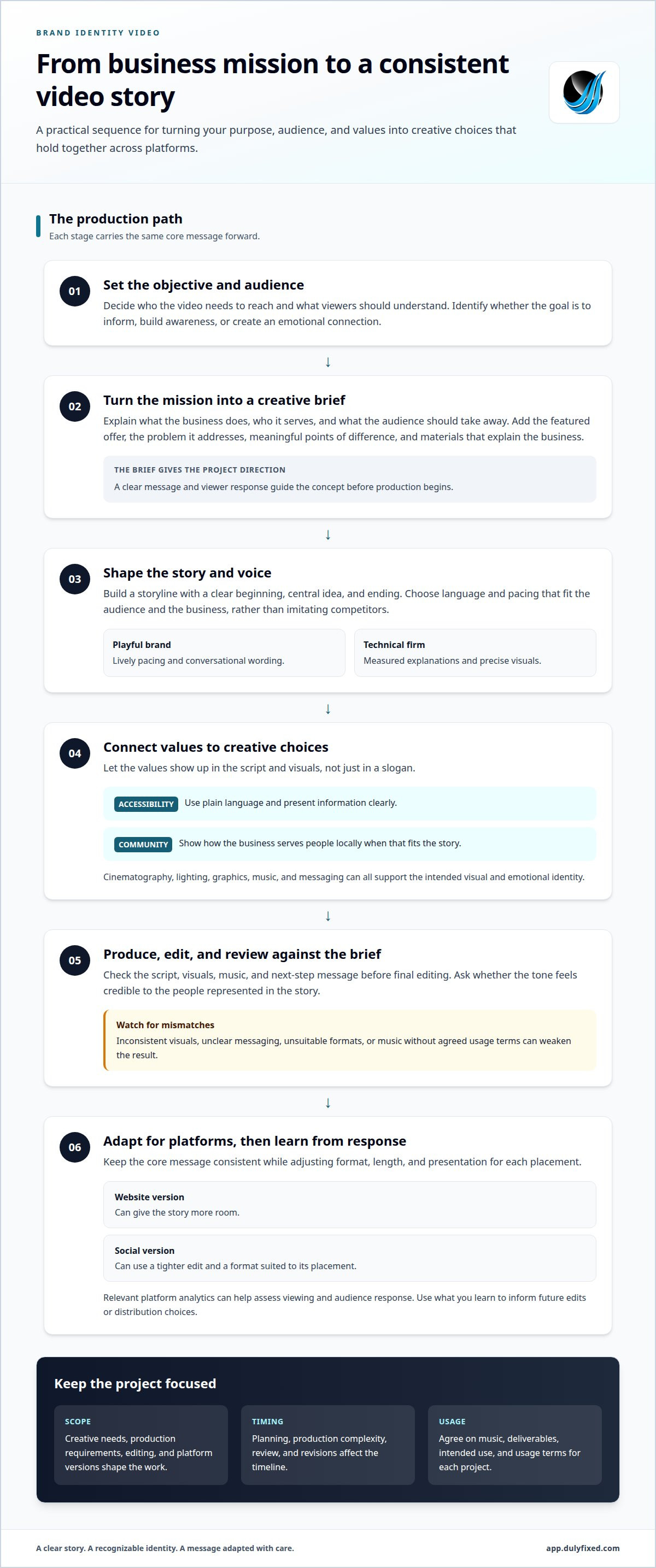
Start by turning the mission and core values into a practical creative brief. It should explain what the business does, who it serves, and what viewers should understand. For example, a company built around careful guidance might use calm narration, direct language, and visuals of people making informed choices. These details give the video a clear direction.
Next, define a voice that fits the audience and marketing strategy. A playful brand might use lively pacing and conversational wording, while a technical firm may need measured explanations and precise visuals. The goal isn’t to imitate competitors, but to showcase the company’s character and keep its message consistent throughout the video.
Connect each creative choice to a value. If accessibility matters, use plain language in the script and present information clearly in the visuals. If community is central, the story might show how the business serves people locally. This alignment helps viewers understand the company’s priorities and the action it wants them to take.
Before final editing, review the script, visuals, music, and calls to action against the brief. A mismatch, such as a high-pressure voice for a service built on patient guidance, can undermine the intended impact. Check that the message stays consistent across versions, even when pacing or framing changes for different viewing contexts. The strategy can aim to build recognition without promising a particular response. One useful final test: does the tone feel credible to the people represented in the story?
How a video production provider develops brand storytelling and concepts
Build the story around the project’s objective and the audience it needs to reach. This focus keeps creative choices connected to a practical business purpose.
Video Types for Brand Identity
Company-story videos, product explainers, educational media, and employee perspectives can each communicate a different part of a brand. A company-story video can show what shaped the business, while an explainer can make a service easier to understand. For example, an educational video for a hypothetical repair business might show how its service addresses a common customer concern without relying on broad claims.
Information to provide in a brand identity video brief
Give the production team a brief that sets out the project’s objective, target audience, key message, and intended viewer response. These details guide the concept before production begins. Include the offer being featured, the problem it addresses, meaningful points of difference, and any existing materials that explain the business. Also note whether the video should inform, build awareness, or create an emotional connection.
Then shape a storyline with a clear beginning, central idea, and ending. A service video, for example, might open with a customer challenge, show how the service works, and close with the next step. Employee or customer perspectives can add human detail when they suit the concept. Market research and audience behavior can also inform the language and creative direction. These choices make the video specific to the business rather than a generic corporate profile.
Dulyfixed Small Business Solutions: Custom Promotional Shorts, Video and Educational Media
Dulyfixed Small Business Solutions helps businesses shape a story for a launch, service, or educational goal through custom promotional shorts, video, and educational media. This work can fit when your business needs a focused way to explain an offer or share its purpose with a specific audience.
Custom Music Production can complement a video’s tone, with deliverables and usage terms agreed for each project. If viewers need a clear next step after watching, a landing page can give them a place to learn more about the featured offer.
Give Your Brand Story a Clear Next Step
Start with one decision: what should a viewer understand or do after watching? Use the answer to guide where the video appears and what information surrounds it. A landing page, follow-up message, and search presence can continue the same story rather than leaving the video disconnected from the customer journey.
A focused brand identity video production project can also highlight where your wider digital presence needs alignment. Dulyfixed Small Business Solutions offers Website Design, Redesigns and Landing Pages, Local and National SEO, and AI Discovery and Structured Data Optimization. These services can support the video’s context and discovery while keeping its central story intact.
Choose a next step that fits your business, whether that’s clarifying where the video will lead viewers or developing its concept. A clear scope turns a brand story into a practical project plan.
Get It DulyfixedFrequently Asked Questions
How can a provider adapt a brand identity video for different platforms and audiences?
A video can preserve the central brand idea while adjusting its opening, pacing, framing, and call to action for each audience. For example, a business serving customers in Soap Lake, Washington, United States, might emphasize local service in one version, then focus on its broader value for national viewers. Captions and platform-specific edits can also make the message easier to follow in different viewing contexts.
How does brand identity video production compare with in-house production?
In-house production gives your team direct control, while a professional provider brings an outside production process. The right fit depends on your available skills, time, and desired scope.
What licensing, music, and usage rights are needed for brand videos?
Agree on the music, deliverables, intended use, and usage terms for each project. Custom Music Production can support the video’s tone.
Video and promotional shorts
Explore a video built around your business, occasion and message.